
Tips6 min readPublished November 11, 2026 by the Électro Ménager Chicoutimi team
Washer smells bad: where the odour comes from and how to get rid of it
When a washer smells bad, it’s almost always moisture and residue trapped somewhere: in the door gasket, the pump filter or the detergent drawer. Most odours go away with a good cleaning and a few changes in habits.
Whether the smell is musty, like sewage or like rotten eggs, here’s where to look, in order, how to clean each part and the signs that the problem is mechanical instead.
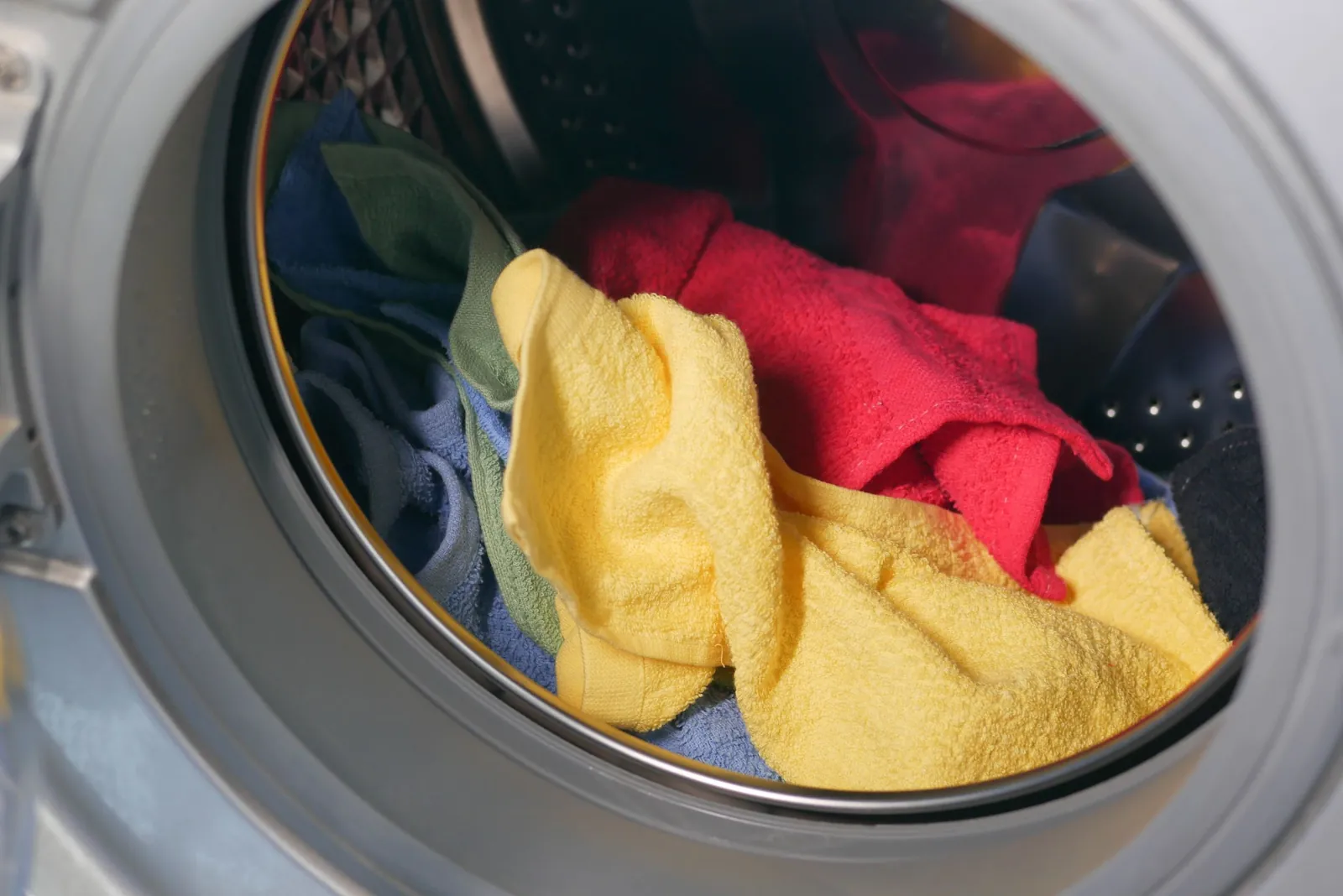
Why a washer smells bad
High-efficiency washers use little water and often wash at low temperatures. That’s good for your power bill, but soap, fabric softener and dirt residue don’t rinse out as well. Add a door that gets closed after washing, and you get a damp, dark spot where bacteria and mould settle in.
Front-load washers are the most affected, because of the rubber gasket around the door. But a top-load washer can smell bad too, especially under the agitator and in the dispenser.
The 6 places to check when your washer smells bad
1. The door gasket
On a front-loader, gently pull the rubber toward you and look into the fold. You’ll often find standing water, hair, lint, sometimes a small sock or black mould. It’s the most common cause of a musty smell.
2. The drain pump filter
On most front-load washers, it’s behind a small hatch at the bottom of the front panel. When it’s clogged, dirty water stays in the machine between washes and ends up smelling like sewage. Have a towel and a shallow dish ready: water will come out.
3. The detergent and fabric softener drawer
Remove the drawer (it often comes out by pressing a tab) and look inside the opening too. Fabric softener forms a sticky paste that gets mouldy fast.
4. The drain hose
If the hose is pushed too far into the standpipe, dirty water from the drain can back up toward the washer. It should be secured properly, without reaching the bottom of the pipe. Follow the height given in the installation manual.
5. The floor drain
If the sewage smell is stronger in the room than in the washer itself, check the floor drain. Its trap dries out when it isn’t used and lets odours come up. Pour a few litres of water into it to refill it.
6. The tub of a top-load washer
Under the agitator and between the tub and the drum, residue builds up out of sight. An empty cleaning cycle often solves the problem.
Need a technician?
We answer 24 hours a day and come to your home, anywhere in the Saguenay.
How to clean a washer that smells bad
- Unplug the washer before touching the filter or the gasket.
- Clean the door gasket with a cloth, hot water and a little detergent. Dry the bottom fold well.
- Empty and rinse the pump filter, then screw it back in tightly to avoid a leak.
- Wash the detergent drawer in hot water with an old toothbrush.
- Run the drum cleaning cycle, if there is one, or an empty cycle at the hottest setting, with the cleaner recommended in the manual.
- Leave the door and the drawer ajar until everything is dry.
Never mix bleach with vinegar or another cleaner: the mixture gives off irritating gases. Use one product at a time.
Front-load washer maintenance: habits that prevent odours
- Take the laundry out as soon as the cycle ends. A few hours of wet laundry in the drum is enough to cause a smell.
- Leave the door and the detergent drawer ajar between washes.
- Use HE (high-efficiency) detergent and stick to the dose. More soap doesn’t clean better: it leaves residue.
- Wipe the door gasket once a week, especially the bottom fold.
- Run a cleaning cycle about once a month, or as often as the manual says.
- Empty the pump filter a few times a year.
When the laundry room is in the basement, as in many Saguenay homes, the air is cooler and damper, and nothing dries quickly. Air out the room and keep the washer door open after every load.
When the smell hides a breakdown
If the smell comes back a few days after a thorough cleaning, the cause may be mechanical. Call a technician if you notice:
- water left at the bottom of the drum at the end of the cycle (pump or drain problem);
- a burning or hot rubber smell during the spin cycle (belt, motor or bearings);
- a leak under the washer, often from a torn door gasket;
- mould embedded in the gasket that won’t come off: the gasket needs replacing.
In those cases, cleaning isn’t enough anymore. Our washer repair page describes the common problems and how an in-home visit works.
Frequently asked questions
It can help dissolve soap deposits, but some manufacturers advise against it for rubber gaskets. Check your washer’s manual and, if needed, use a cleaner made for washers.
Most often, because the washer itself is dirty or the laundry stayed wet in the drum too long. Clean the gasket, the filter and the drawer, then run an empty cycle with hot water.
First smell the empty drum, then the floor drain. If the odour comes from the drain, fill its trap with water. If it comes from the washer, start with the pump filter.
Wipe the gasket every week and run a cleaning cycle about once a month, or as the manual says. Empty the pump filter a few times a year.
The smell keeps coming back?
If your washer smells bad even after a thorough cleaning, or if it drains poorly, a technician can check the pump, the gasket and the hose at your home. We answer 24 hours a day in Chicoutimi, Jonquière and La Baie.