
Tips6 min readPublished November 11, 2026 by the Électro Ménager Chicoutimi team
Dryer not heating: what to check before you call
When an electric dryer turns but isn’t heating, the most common causes are simple: one of the dryer’s two breakers has tripped, or the vent is clogged enough to blow the thermal fuse. Before you think about replacing the appliance, a few checks take ten minutes.
This guide explains why a dryer won’t heat, what you can safely check yourself and which parts a technician tests when the problem is inside.

First: does the dryer heat a little, or not at all?
Run a 10-minute cycle with a damp towel, then touch it. If it’s lukewarm, the dryer still heats but the air isn’t flowing well: look at the lint trap and the vent. If it’s cold, no heat is getting through at all: think breaker, thermal fuse or element.
That difference guides everything that follows. A dryer that dries slowly and a dryer that doesn’t heat at all often don’t have the same problem.
Checks you can do yourself
The double breaker
An electric dryer runs on 240 volts, with a double breaker at the panel. If only one half trips, the motor can still turn the drum, but the element stops heating. Switch the breaker fully off, then back on.
The lint trap
A full lint trap cuts down the airflow. Empty it before every load and wash it in soapy water once in a while: dryer sheets leave a nearly invisible film that clogs the mesh.
The vent and the outside exhaust
Go outside while the dryer is running. You should feel a strong flow of warm air at the flap. If barely any air comes out, or the flap is blocked by lint, ice or snow, the vent is to blame. Our guide on how to clean a dryer vent explains how, or we can take care of it for you.
The cycle setting
Make sure an “air only” or “no heat” cycle wasn’t picked by mistake, and that the timer isn’t on the cool-down period.
Unplug the dryer or switch off its breaker before opening a panel. An electric dryer runs on 240 volts.
Need a technician?
We answer 24 hours a day and come to your home, anywhere in the Saguenay.
Dryer runs but won't heat: the parts involved
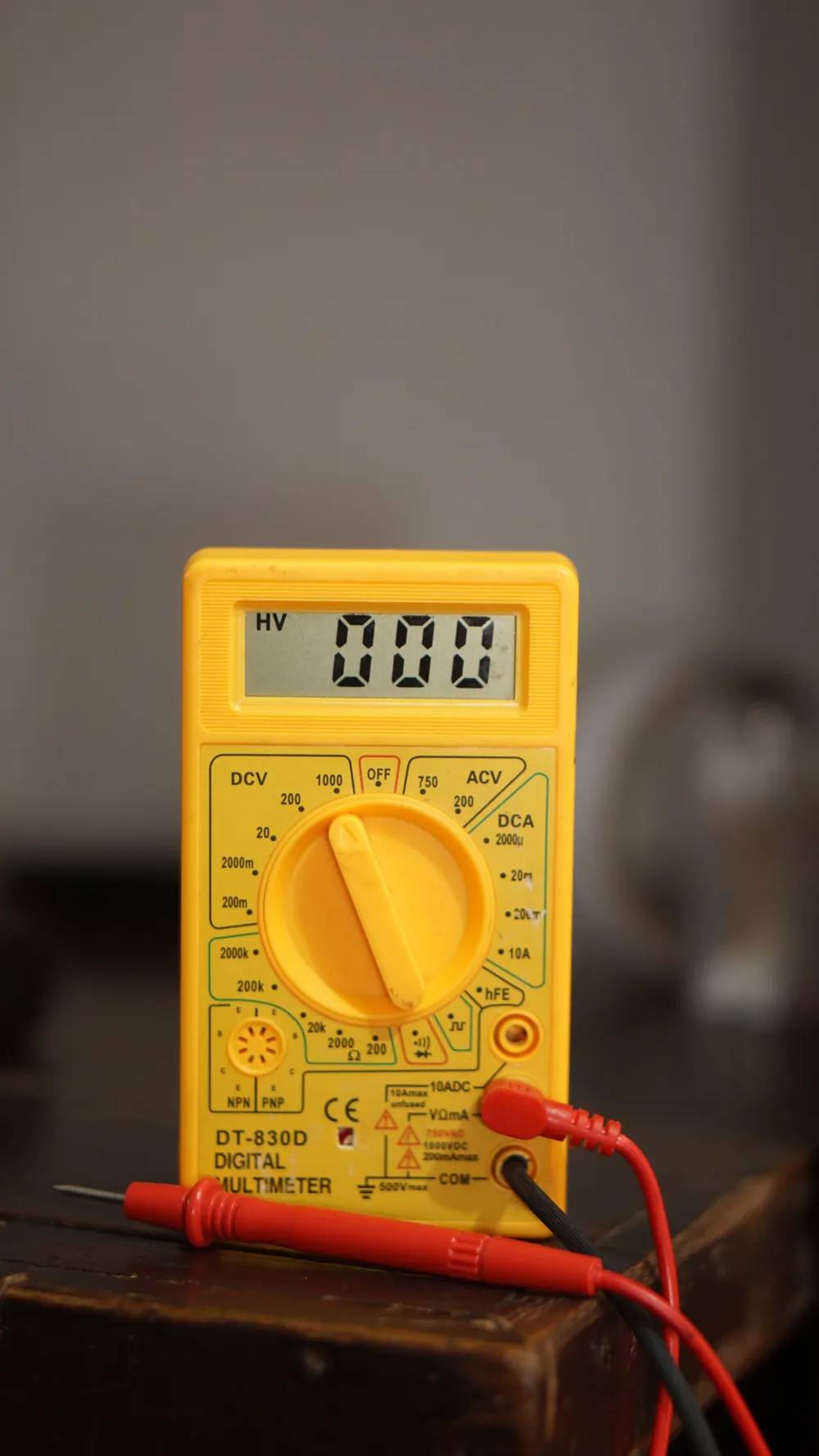
If the breaker, the lint trap and the vent are fine, the problem is inside the appliance. Here are the parts a technician tests, usually with a multimeter.
The thermal fuse
It’s a safety part that cuts the heat when the dryer overheats. It doesn’t reset: once it’s blown, it has to be replaced. Above all, you need to find out why it blew, or the new one will blow too. A clogged vent is the classic cause.
The heating element
The element’s coil eventually breaks with time and heat. A broken element no longer lets current through: the dryer turns normally, but the air stays cold.
The thermostats
The cycling thermostat and the high-limit thermostat control the temperature. When one of them stays open, the element stops getting power.
The sensor and the control board
On newer dryers, a faulty temperature sensor or control board can also block the heat. The error code displayed often helps find the area at fault.
Dryer not heating: what to avoid
- Bypassing the thermal fuse with a wire: it’s there to prevent a fire.
- Letting the dryer run cycle after cycle with no heat: the motor and bearings wear out for nothing.
- Replacing the element without checking the vent: if the air isn’t flowing well, the new part may fail too.
Repair or replace the dryer?
A dryer that won’t heat is often repairable: the thermal fuse, thermostats and heating element are replaceable parts, often in a single visit when they’re available. Replacement is mostly worth it when the drum, motor and bearings are worn out too.
The technician tells you straight what’s going on, and you make the call. To see how the visit works, check out our dryer repair page.
Frequently asked questions
Most often, because of a half-tripped breaker, a blown thermal fuse or a broken heating element. Check the double breaker and the vent first, then have the parts tested.
It’s an inexpensive part, but you have to open the appliance and find out why it blew. If the vent stays clogged, the new fuse will blow too.
The heat is there, but the moist air isn’t getting out. Clean the lint trap, check that the outside flap opens properly and have the vent cleaned if it’s long or has many elbows.
It depends on the load and the model. But if a normal load now needs two full cycles, the air isn’t flowing well or the heat has dropped.
Still no heat?
If the basic checks didn’t change anything, a technician can test the thermal fuse, the element and the thermostats at your home. We answer 24 hours a day in Chicoutimi, Jonquière and La Baie.